Weather Update
Ohio Wesleyan will reopen at noon Tuesday, Jan. 27, 2026, but faculty may hold morning classes remotely. Students should watch for faculty communication. Essential personnel should report as normally scheduled.
The English major is an important foundation for a wide variety of careers. As an English major, you build analytical and communications skills that make you an attractive job candidate, especially in today's dynamic, global economy dependent on flexibility, critical thinking, and fast and accurate communication. And if you are interested in pursuing graduate study in English in a literature or MFA program, a top-notch faculty and flexible curriculum will provide you with the ability to tailor your studies to your academic goals.
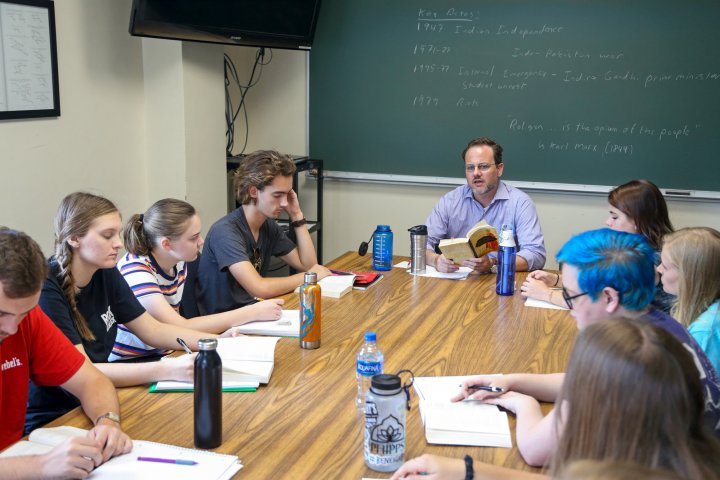
The English Department fosters curiosity about language and culture. In English courses, pleasurable reading is the foundation for developing skills in writing, speaking, and analytical thinking.
The Creative Writing Concentration encourages the comprehensive study and practice of more than one genre, and at the upper-level, students have the opportunity to specialize in a genre of writing in rigorous, advanced genre-specific workshops. Along with working alongside talented and publishing authors, our students enjoy an impressive annual Poets & Writers Reading Series, which brings in award-winning authors and lecturers for readings, writing salons, and classroom visits.
The English for Educators Concentration prepares students who are interested in teaching English in middle or high school with an easy-to-navigate path designed specifically to meet their needs. Through a rigorous and wide-ranging course of study that includes literature, language, writing, and multimedia narratives, students will acquire essential skills and cultural competencies while meeting licensure requirements for teaching English grades 7-12.
The Literature concentration focuses on reading and analyzing a variety of English-language literatures from around the world, both historic and contemporary. Students gain important skills in research, critical thinking, and written and oral expression. Through spirited discussion and debate of complex issues such as race, power, and identity, students study the ways in which historical and cultural contexts impact literary traditions, genres, and modes of expression.
The English minor consists of five units of literature and writing. Minors must take ENG 250 and four electives. All prospective minors are encouraged to take ENG 250 before enrolling in an upper-level course. A course taken credit/no entry may not be counted toward the minor. At least three of the five required courses must be taken at Ohio Wesleyan. NOTE: ENG 105 and 495 do not count toward the minor.
OWU is people. Brilliant, engaging, passionate, friendly, genuine people. Meet some of them here.
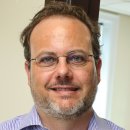
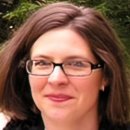
Professor Allison studies nineteenth-century British and utopian literature and is completing a book on British socialist aesthetics.
Professor Gabriella Friedman teaches contemporary multiethnic American literature and earned her PhD from Cornell in 2021.
Professor Aza Pace specializes in eco-poetry and myth-inspired writing, exploring feminist poetics and the connections within our care.
Professor Stephanie Merkel joined OWU in 1998 and researches Russian Romanticism, Nabokov, Solzhenitsyn, and Akhmatova.
Professor Long teaches English Renaissance literature and theatre history, specializing in Shakespeare, and also leads travel-learning courses.
Professor Comorau specializes in postcolonial British literature and is writing a book on postcolonial rewritings of classic novels.
Medievalist Professor DeMarco, a Shankland Award-winning teacher, is writing a book on war and vengeance in chivalric literature and directs Ancient, Medieval, and Renaissance Studies.
Students in Professor Bob Olmstead's 'Writing Fiction' course made a trip to the Atlantic Center for the Arts in Florida to partake in a writing residency, where they immersed themselves in their manuscripts, workshopped new material, and discussed writing in the sun.
Our students go on to do great things, pursuing exciting careers in teaching, writing, and public policy, to name a few. Here, recent alum Katalyn Kuivila poses before the Ohio House of Representatives, where she serves as a Legislative Aide.
English major John Keller '20 and three students used a Theory-to-Practice Grant to walk Wales's Offa's Dyke Path, exploring the region's literature, history, geology, and environmental practices.
Nearly fifty students gather at Fresh Start Bakery for the first ever Speak/Easy, a new undergraduate open-mic reading series. Held once a month downtown, the event showcases the best in student writing, and often includes readings from faculty and local community members.
Students in Professor Long's "Shakespeare at the Globe" class examined Shakespeare's plays in the context of early modern theatrical culture.
Students in Professor Butcher's advanced creative writing workshop and literary editing course tour the offices of the Kenyon Review to learn more about careers in editing and publishing.
Students celebrated their favorite authors with literary-themed Valentine's Day cupcakes featuring Joan Didion, James Baldwin, Virginia Woolf, and more.
Led by English professor Nancy Comorau, OWU students spent a semester reading poetry and prose by black British and postcolonial authors and then traveled to London, Liverpool, and Manchester to explore the black British and postcolonial arts scene and examine the ways in which the UK represents its national identity to visitors.
Bestselling author Donovan Hohn visited classrooms to discuss sustainability and research and gave a public lecture on The Blind Oceanographer.
Students in Dr. Lynette Carpenter's 'American Images' literature class pose in front of the Ripley House, a famous stop on the Underground Railroad that figured in the actual event on which Eliza's escape in Uncle Tom's Cabin was based.
Essayist John D'Agata, director of Iowa's Nonfiction Writing Program, led a writing salon and reading, exploring lists in literature and the essay as "an art form that tracks the evolution of consciousness."
Students, faculty, and community members welcomed U.K. Poet Laureate Carol Ann Duffy for a reading, Q&A, and book signing.
Students, faculty, and community members welcomed U.K. Poet Laureate Carol Ann Duffy, the first woman, Scottish, and LGBTQIA+ laureate, for a reading, Q&A, and book signing.